
I’m Dr. Maya Chen. If you’ve ever laid in bed exhausted while your thoughts keep sprinting, you already know how frustrating sleep can be.
In clinic and in everyday life, I see the same pattern: stress rises, routines slip, and sleep becomes “optional” until it finally breaks us down.
This guide explains how Synergy PM by King Harvest Wellness (an indica-leaning nighttime tincture) may support relaxation and more consistent sleep—plus how to use it responsibly.
We’ll keep it grounded in real-world use, current research, and common-sense safety. No hype—just clear steps you can actually follow.
What Is an Indica THC Tincture (and What “Unwind” Really Means)
A THC tincture is a concentrated cannabis extract taken in small, measurable amounts—most commonly under the tongue (sublingual).
“Indica” typically refers to cannabis varieties and terpene profiles that people associate with body relaxation and evening use.
In plain terms: an indica-leaning tincture is often chosen to help you downshift.
King Harvest Wellness offers nighttime-focused options like
Synergy PM as part of its broader tincture lineup.
You can also explore their full collection here:
Tinctures from King Harvest (100% organic).

Quality matters with any cannabis product. If you’re wondering what “lab-tested” should actually mean (and why it protects you),
King Harvest breaks it down clearly here:
What makes a product “lab-tested” and why does it matter?
How THC May Affect Sleep (Without the Jargon)
THC interacts with the body’s endocannabinoid system—one of the networks involved in stress response, mood regulation, and sleep-wake signaling.
For some people, a low-to-moderate dose in the evening can feel like turning down the volume on racing thoughts or physical tension.
The research picture is still evolving, but there are two useful takeaways:
-
Sleep disruption is widespread. The CDC reports that roughly 35% of adults experience short sleep duration.
Source: CDC Sleep and Sleep Disorders Data. -
Cannabinoids may help some sleep outcomes for some people. A review in
Frontiers in Psychiatry (2021)
discusses how cannabinoids are being studied for insomnia-related symptoms, including time to fall asleep.
“Cannabis compounds, particularly in low doses, can act as a bridge to better sleep by modulating stress responses, though individual results vary based on dosage and tolerance.”
Dr. Michael Breus, clinical psychologist and sleep specialist, via
The Sleep Doctor
My clinical perspective: when THC helps, it’s often because it supports relaxation—and relaxation is the doorway into sleep.
But dose, timing, and your individual sensitivity matter more than brand names or buzzwords.
Benefits People Commonly Report (Relaxation, Stress, and Sleep Continuity)
Most people don’t seek a “knockout.” They want an easier transition from “wired” to “ready for bed,” and fewer wake-ups once they’re asleep.
In real-world use, an indica-leaning THC tincture is most often used for:
- Evening stress relief (especially the “can’t shut my brain off” feeling)
- Body relaxation after long days, workouts, or chronic tension
- More consistent sleep by supporting a calmer pre-sleep state
Market research also reflects how commonly people use cannabis for stress management. Brightfield Group reported stress relief as a leading reason for use in recent consumer insights:
Brightfield Group Insights.
(Note: consumer surveys are useful context, but they aren’t the same as clinical trials.)
If you’re exploring how to personalize cannabinoid products (for example, balancing THC with CBD),
you may also like these related reads from King Harvest’s education library:
FECO (Full Extract Cannabis Oil) overview
and the dosing-focused resources here:
King Harvest Dosing articles.
How to Use an Indica THC Tincture for Sleep (Step-by-Step)
The goal is a dose that helps you feel calm—not foggy. Here’s a careful, beginner-friendly approach I recommend:
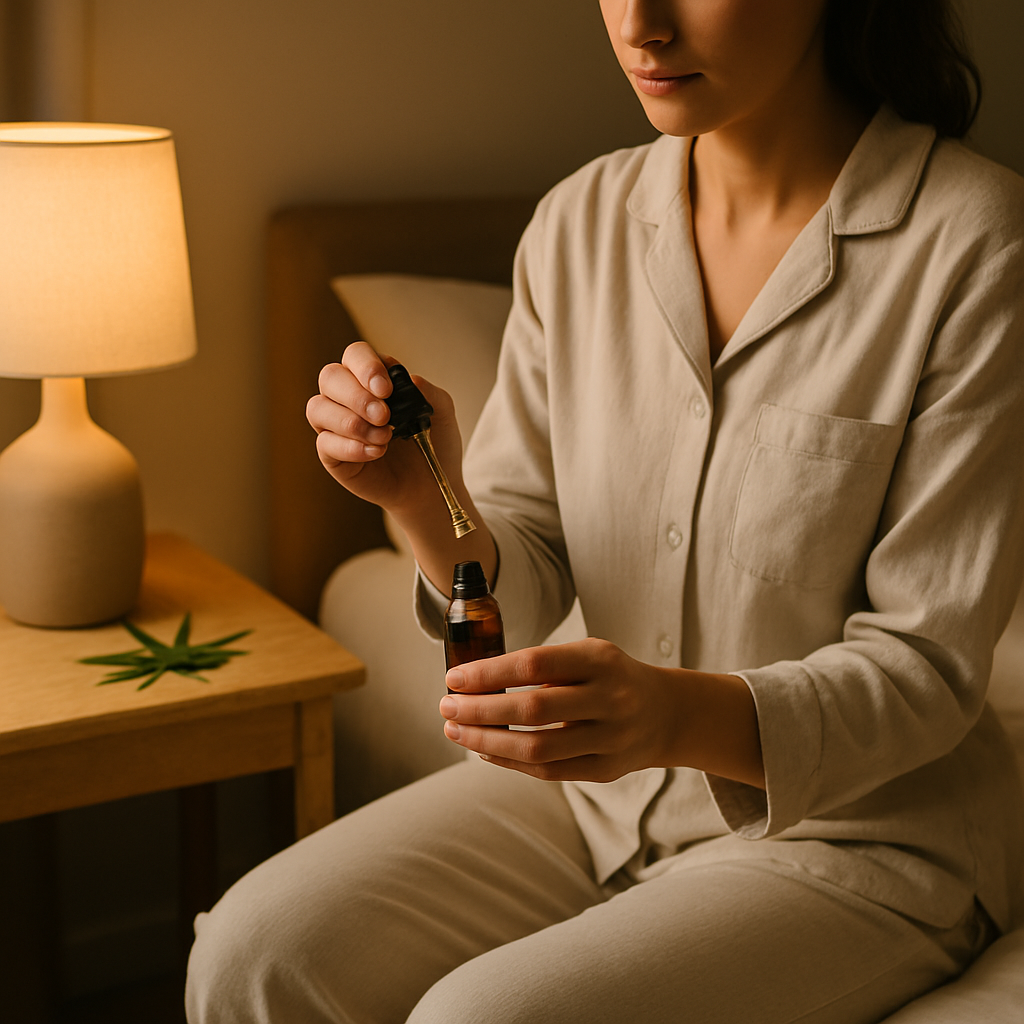
- Choose a consistent time: Take it 30–60 minutes before bed, ideally after you’ve started winding down (lights dim, screens off).
-
Start with a very low dose: Many beginners start with a micro-dose and increase slowly every few nights if needed.
If your product label lists mg per dropper, use that—not guesswork. - Use sublingual technique: Place the tincture under your tongue and hold for 30–60 seconds before swallowing.
- Track 3 things for 7 nights: time to fall asleep, number of wake-ups, and next-day grogginess.
- Adjust gradually: If you feel “hung over,” reduce dose or take it earlier. If you feel nothing, increase slightly—slowly.
Want a curated nighttime routine? Consider pairing a tincture with other wellness options from the shop:
King Harvest Bundles.
If you prefer to browse all options first, start here:
Buy CBD/THC wellness products.
Important: Avoid combining THC with alcohol or other sedatives unless a qualified clinician has advised you—mixing can intensify impairment.
Mini Case Study: A “Low and Slow” Night Routine (King Harvest Consultation Composite)
To keep this useful (and brand-relevant), here’s a composite case based on common patterns reported in King Harvest consultations
(details anonymized and combined; this is not a promise of results).
Starting point: A 41-year-old professional with stress-related insomnia: long sleep latency (45–60 minutes), 2–3 wake-ups/night, and next-day irritability.
They wanted a natural option and did not tolerate OTC antihistamine sleep aids due to morning grogginess.
Plan: A very low-dose, indica-leaning THC tincture taken sublingually 45 minutes before bed, plus a simple wind-down routine:
warm shower, no screens for 30 minutes, and consistent bedtime.
Outcome after 14 nights (self-tracked): sleep latency improved to ~20–30 minutes on most nights, wake-ups reduced to 0–1/night,
and next-day grogginess remained minimal when the dose stayed low. The biggest “win” was consistency—sleep felt more predictable.
If you want help building a plan around your own sensitivity, schedule a free, no-pressure call:
Free Consultations for Medical Cannabis | King Harvest.
Safety, Side Effects, and Who Should Skip THC
“Natural” doesn’t mean risk-free. Most side effects are dose-related and improve with smaller amounts or earlier timing. Common considerations include:
- Next-day drowsiness (usually from too high a dose or dosing too late)
- Dry mouth and increased appetite
- Impairment: do not drive or operate machinery after dosing
- Drug interactions: if you take sedatives, antidepressants, or seizure medications, ask a qualified clinician first
Skip THC if you’re pregnant or nursing, or if THC is not legal where you live.
When in doubt, get guidance from a professional and use a product with clear testing standards.

If you’re comparing extracts and want a deeper education-first overview, these King Harvest resources are helpful:
FECO vs RSO: What’s the difference?
and
How to use cannabis oil.
FAQ
How is an indica THC tincture different from over-the-counter sleep aids?
An indica-leaning THC tincture is typically used to support relaxation through the endocannabinoid system.
Effects vary by dose and individual sensitivity, so starting low and tracking your response matters.
Can beginners use a THC tincture safely?
and adjusting gradually over several nights. If you take medications or have complex health conditions, get personalized guidance via
King Harvest consultations.
What if I don’t feel anything the first night?
Use the same low dose for a few nights while tracking sleep latency and wake-ups, then increase slightly if needed.
Avoid “jumping” to high doses—more isn’t always better for sleep.
How do I know a tincture is high quality?
King Harvest explains why testing matters here:
What makes a product “lab-tested” and why does it matter?.
Conclusion: A Calmer Night Starts With a Calmer Plan
If stress is the spark that keeps your brain awake, an indica-leaning THC tincture can be a practical tool—especially when you treat it like a
routine, not a rescue. Start low, track your sleep, and adjust slowly.
Ready to explore options? Browse:
Synergy PM,
the full tincture collection,
or all King Harvest products.
If you want help now, book a free consultation:
Get Help Now.
