
I’m Dr. Camille Soto. If you’ve ever unzipped your gym bag and felt personally attacked by the smell of “yesterday’s effort,” you’re in familiar territory.
Sweat isn’t the villain—microbes and trapped moisture are. The good news: you can fix this quickly, and you can keep it from coming back.
Related Video
Video: Eliminate Odor From Gym Clothes With This Hack! by Grow Fragrance
Why workout gear smells (and why it gets worse in a gym bag)
Here’s the microbiology in plain English: fresh sweat is mostly odorless. The smell happens when skin microbes (including
Staphylococcus species) metabolize sweat components and leave behind volatile compounds. Warmth + moisture + time turns your gym bag into a
cozy fermentation chamber.
Fabric choice matters. Synthetic “performance” textiles often hold onto oily residues and provide a friendly surface for odor-causing bacteria.
One frequently cited paper in the Journal of Applied Microbiology
found that synthetics can retain significantly more odor-associated bacteria than cotton under similar conditions—exactly why your technical tee can smell
“clean” out of the dryer and still turn sour mid-workout.
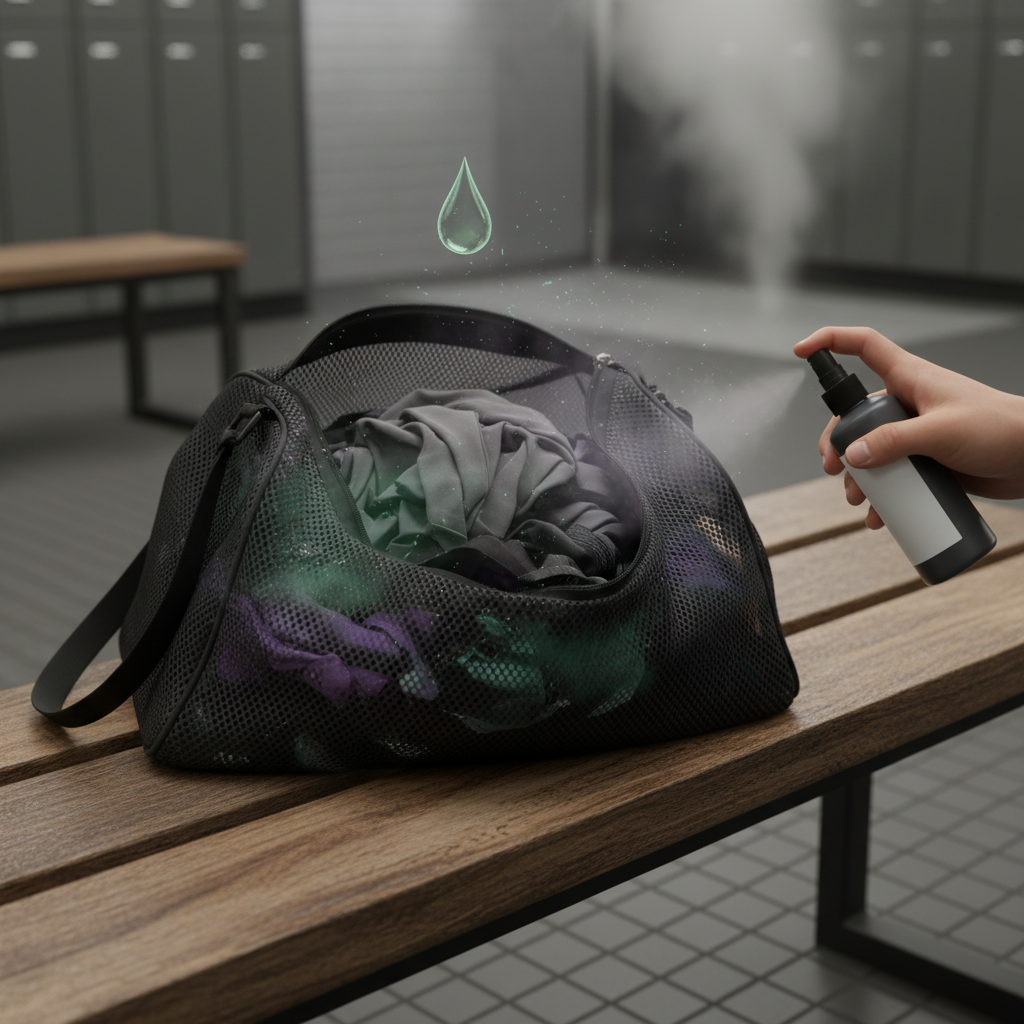
Hotspots I see most (in labs and real life): shoes, sports bras/leggings, damp towels, and the bag lining
where sweat aerosol + skin oils quietly accumulate.
The 10-minute post-workout routine that prevents 80% of gym-bag odor
If you only change one habit, make it this: never seal damp gear in a closed bag. Your goal is to remove moisture fast.
The CDC’s laundry guidance
emphasizes proper washing and thorough drying to reduce microbial load—drying is not optional if you want odor control.
- Unpack immediately: open the bag fully; pull out towel, clothes, and shoes.
- Vent + dry: hang items or spread them on a rack. Point a fan if humidity is high.
- Quick-hit the bag lining: turn pockets inside out and let the interior air for at least 1–2 hours.
- Contain the worst offenders: if you must commute, use a breathable mesh pouch for clothes and a separate shoe bag.
If you’re already using enzymes at home, keep it consistent. I walk through safety and best practices in
Safe Enzyme Use Around Kids and Pets: What Science Says.
Deep-clean protocol (when the smell is “baked in”)
When gear smells immediately after you start sweating, that’s a classic sign of residue buildup—detergent, fabric softener, skin oils,
and sweat proteins that survive normal washing. This is where enzymes earn their keep: they help break down the organic material microbes feed on.
Workout clothes (especially synthetics)
- Pre-soak: 30–60 minutes in cool water with an enzyme odor eliminator before washing.
- Skip fabric softener: it can leave a coating that traps odor.
- Dry completely: if you air-dry, ensure full dryness before folding.
Gym bag
- Empty + vacuum: crumbs and grit hold odor and moisture.
- Wipe the interior: mild soap + water on a cloth, then follow with an enzyme spray on the lining (spot test first).
- Sun + airflow: UV and ventilation help, but don’t rely on them alone.
Sneakers
- Remove insoles: they’re often the smell epicenter.
- Dry overnight: newspaper works; a boot dryer works better.
- Deodorize: baking soda can absorb odor; enzymes can remove the underlying residues.
If your home has multiple odor sources (pets + fitness gear is a common combo), you’ll like
Multi-Pet Households: Compounded Odor Challenges
and my blunt-but-true reminder: Stop Blaming the Dog. It’s Your Couch.
DIY vs. professional odor eliminators (what works fastest)
I’m not anti-DIY. I’m anti-disappointment. Baking soda and vinegar can help with quick odor reduction, but they don’t always remove the
cause—the residue layer that keeps reactivating when you sweat.
Vinegar is commonly used because acetic acid can shift pH and reduce some odor compounds. For broader indoor air and chemical exposure context,
the EPA’s overview of VOCs
is a useful reference. For product safety and ingredient screening, the
EPA Safer Choice program is one of the more practical consumer tools.

When you want the “fast + lasting” combo, use an enzyme-based formula and treat the bag lining, shoe interiors,
and synthetic waistbands—the places detergent often misses. I break down the real performance differences in
DIY vs. Pro Products: What Actually Works.
After you’ve removed the source, you can maintain the room experience with a clean-burning candle—think of it as ambiance, not camouflage.
If you want the science on why heat changes odor perception and ingredient behavior, read
How Heat Activates Odor-Killing Ingredients in Candles.
Recommended next steps (Modest & Co.):
• Start with an enzyme spray for fabrics and bag linings: Modest & Co. Odor-Eliminating Spray
• For post-cleanup freshness: Modest & Co. Clean-Burning Candle Collection
• Browse all solutions here: Shop Modest & Co.
Note: Product availability and exact names can change—linking to the current catalog ensures you see the latest options.
Case study: Under Armour’s odor-control approach (and what you can copy at home)
Under Armour’s 2019 launch of UA RUSH highlighted mineral-infused textiles and performance positioning, and they discussed product testing and athlete
feedback around wear and wash durability. Their announcement is here:
Under Armour UA RUSH press release
.
What’s transferable to your routine isn’t the exact fabric tech—it’s the strategy:
reduce microbial growth (drying), reduce residues (enzymes), and reduce re-contamination (bag hygiene).
That three-part system is why some people “never have gear stink,” and others are laundering the same leggings like it’s a second job.
Expert quote: the dermatologist’s view (and my microbiologist add-on)
“Odor in workout gear stems from bacterial overgrowth on damp fabrics. Regular washing and drying are key, but antimicrobial treatments can extend
freshness between cleans.”
Dr. Joshua Zeichner, via
Health.com
My add-on: antimicrobial treatments help, but residue removal is the make-or-break variable for repeat offenders—especially in synthetics.
If a garment smells the second it warms up, you’re not dealing with “new stink.” You’re reactivating old chemistry.
FAQ: Gym bag and workout gear odors
How often should I clean my gym bag to prevent odors?
Weekly is a solid baseline if you train regularly. If you carry damp towels or shoes, wipe the interior and air it out after each use, then do a
deeper clean (vacuum + wipe + dry) once a week.
Can I use essential oils to banish workout gear smells?
You can use them lightly for fragrance, but don’t confuse scent with removal. Some oils have antimicrobial activity in lab settings, yet they can
stain fabrics and won’t reliably break down sweat residues. If you use them, dilute properly and spot test first.
What’s the fastest way to deodorize sneakers?
Dry them completely (remove insoles, use airflow or a shoe dryer), then treat the interior with an enzyme spray and let it dry again. Baking soda
can help absorb odor, but drying + residue removal is what stops the smell from returning.
Are there eco-friendly options for odor control?
Yes. Look for enzyme-based formulas screened by reputable programs (for example, EPA Safer Choice where applicable) and use reusable charcoal
deodorizers for passive odor absorption between workouts.
Conclusion: keep the sweat, lose the stink
Odor-free gear isn’t about perfection—it’s about a simple system: dry fast, wash smart, and use enzymes when residues cling.
If you want a ready-to-use solution, explore the current lineup at
Modest & Co.
and pair it with the routines above.
