
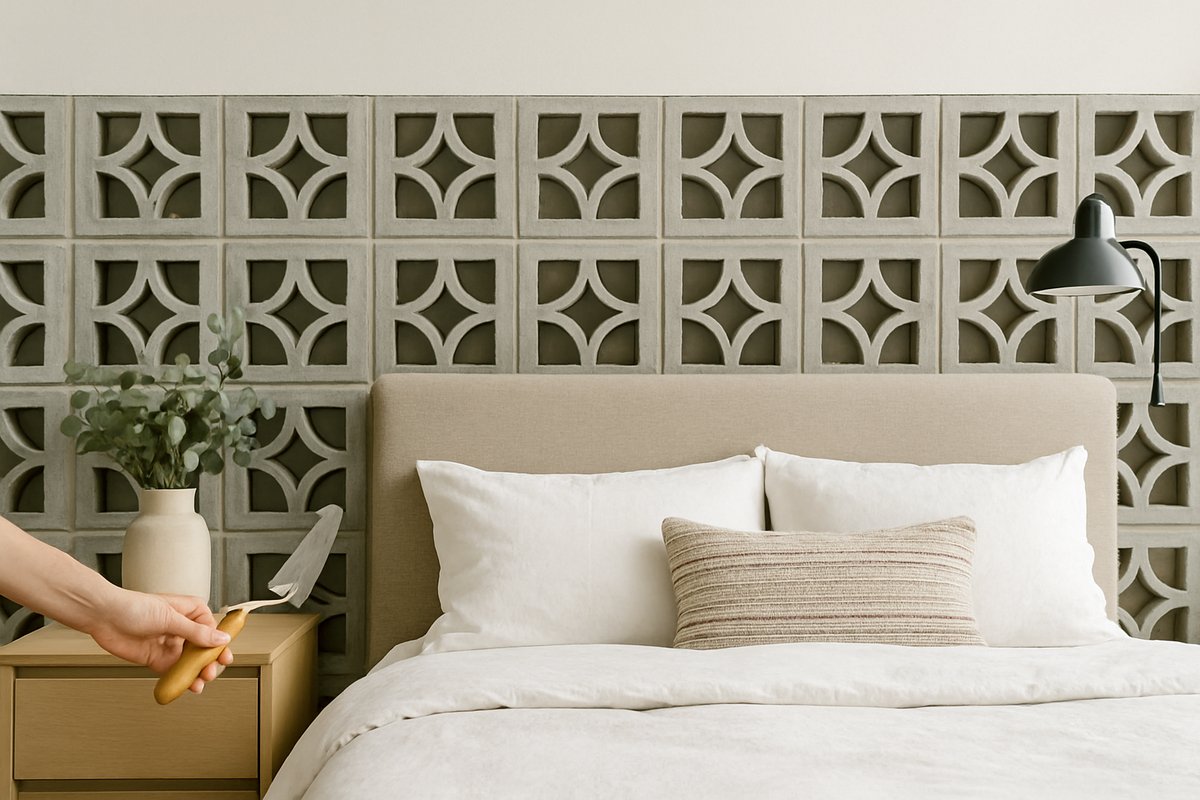
I’m Sophia Lin, and I have a soft spot for DIY projects that feel architectural—without turning your bedroom into a construction zone.
A breeze block headboard hits that sweet spot: sculptural texture, mid-century character, and a surprisingly practical boost in airflow.
Below, I’m sharing design ideas you can copy, a weekend-friendly build plan, and the details that make it look intentional (not improvised).
Why Choose Breeze Blocks for a Headboard?
Breeze blocks (also called decorative concrete screen blocks) are having a moment indoors—and for good reason.
They’re modular, graphic, and they create that “designed” look even when your furniture is simple.
Unlike upholstered headboards that can stain or wood headboards that scratch, concrete holds up beautifully over time.
From a durability standpoint, concrete is built for longevity. The
American Concrete Institute’s overview on concrete durability
notes that well-made concrete can maintain performance for decades with minimal maintenance—exactly what you want behind a bed where bumps and scuffs happen.
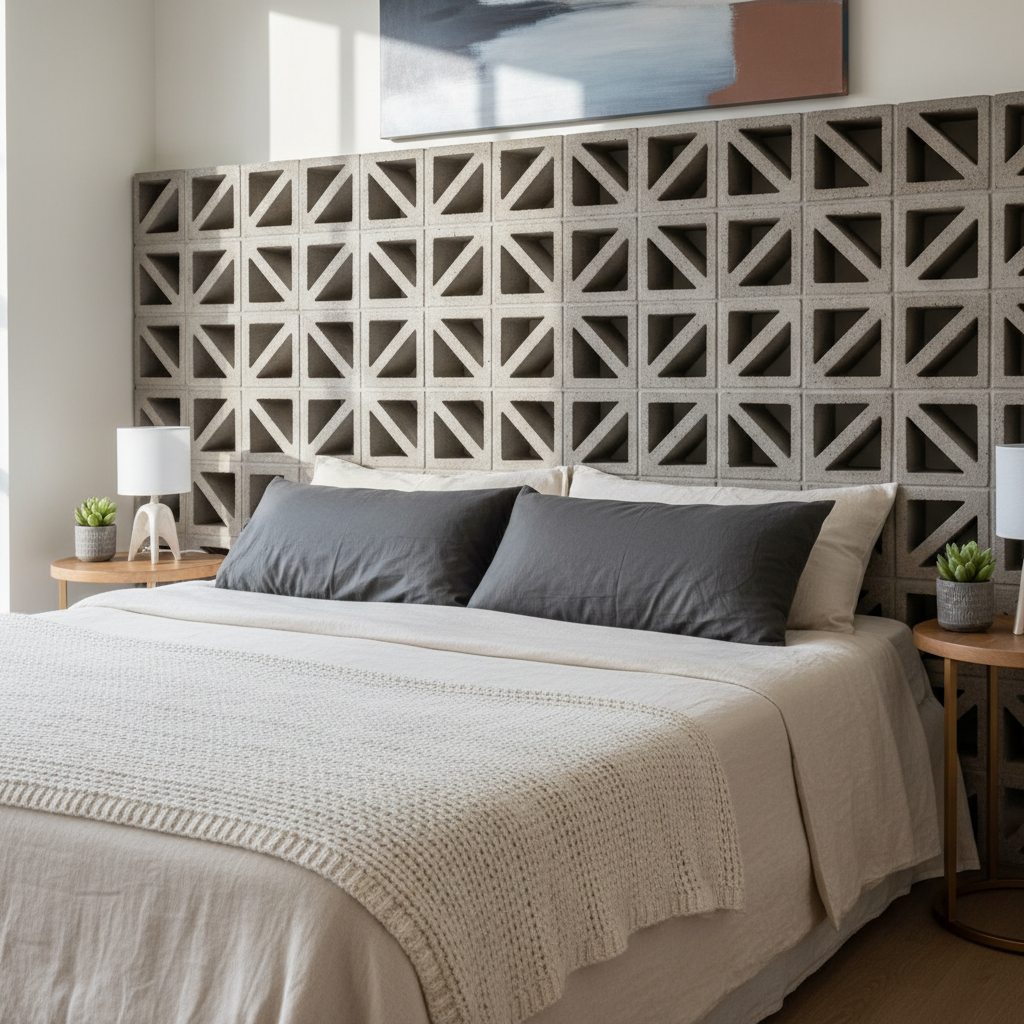
If you’re already using concrete accents elsewhere (planters, tables, sinks), a breeze block headboard ties the room together.
For a broader “how it all works together” approach, see
Integrating Concrete in Home Design.
7 Breeze Block Headboard Ideas (From Minimal to Statement-Maker)
1) The clean grid (minimalist, easy, and forgiving)
Stack blocks in a simple rectangle that’s slightly wider than your bed. The grid reads calm and modern, and it’s the fastest path to a finished look.
Tip: keep the edges crisp by using a level every row—tiny drifts add up visually.
2) The offset stack (a “brick” layout that looks custom)
Stagger every other row by half a block for a pattern that feels more architectural.
This is my go-to when someone wants “not too loud” but still design-forward.
3) Color-blocked paint (soft modern, boho, or playful)
Paint the blocks before installation (easier) or after (more seamless). A two-tone scheme—warm white + clay, or charcoal + sand—keeps it elevated.
Use a masonry primer and paint rated for concrete, then seal.
4) Ombre wash (subtle depth without busy patterning)
A diluted limewash-style effect (or a thin masonry stain) gives variation that reads artisanal.
It’s especially pretty with linen bedding and warm wood nightstands.
5) LED backlighting through the perforations (instant ambiance)
Run an LED strip behind the block field so light glows through the openings.
Choose warm color temperature (around 2700K) for bedroom comfort, and keep cords concealed with a raceway.
6) Full-height screen headboard (studio apartments + drama)
Extend the blocks higher—near ceiling height—so the headboard becomes a partial room divider.
It’s a smart move in open-plan spaces because you get separation without blocking light.
For pattern inspiration that translates beautifully indoors, browse
Curved Façades with Breeze Blocks: Design Ideas.
7) Floating “panel” headboard (lighter look, less material)
Instead of a full rectangle, build a centered panel that’s roughly the width of the mattress.
This reduces visual weight in smaller rooms while still delivering the breeze block texture.
DIY appetite supports this trend: a
Statista DIY participation snapshot (U.S., 2023)
reports widespread engagement in DIY home improvement—exactly why approachable projects like headboards keep climbing.
Step-by-Step: How to Build a Breeze Block Headboard (Weekend-Friendly)
Before you start: breeze blocks are heavy. If you’re renting, consider a freestanding design or a narrower “panel” approach.
If you’re attaching to a wall, anchor properly and don’t guess—safety first.
Materials & tools
- Breeze blocks (order extras for cuts/breakage). Shop options here: Moda Concrete Breeze Blocks.
- Construction adhesive or mortar (choose based on wall type and load)
- Level, tape measure, pencil, straightedge
- Wall anchors/fasteners appropriate to studs/masonry (if wall-mounted)
- Drop cloth, gloves, eye protection, dust mask
- Concrete sealer (matte is usually best for bedrooms)
1) Measure and plan your layout
Aim for a finished height of roughly 24–36 inches above the mattress for visual impact.
Dry-lay the blocks on the floor first so you can confirm the pattern and width.
2) Prep the wall and protect surfaces
Clean the wall, mark centerline and edges, and lay down a drop cloth.
If you’re doing lighting, plan your outlet access and cord path now—before anything is stacked.
3) Build the base row perfectly level
The first row determines everything. Take your time, check level, and adjust.
If you’re using adhesive, apply consistently; if mortar, keep joints even.
4) Stack subsequent rows (stagger for stability)
Work row by row. If you’re doing an offset pattern, stagger like brickwork.
Periodically step back and check alignment—your eye catches small drifts fast in a headboard.
5) Cure, then seal
Let the assembly cure per product instructions (commonly ~24 hours for many adhesives).
Finish with a concrete sealer to reduce dusting and make wipe-downs easier.
If you want a deeper install walkthrough, I recommend reading
How to Install Breeze Blocks?
before you start.
Benefits in Real Bedrooms: Airflow, Durability, and a More Sustainable Choice
The open geometry of breeze blocks creates airflow and gives you that soft “screen” effect—light passes through, but the wall feels layered.
Practically, they’re also low maintenance: dust, wipe, and reseal occasionally if needed.
On the sustainability side, precast elements can reduce jobsite waste because they’re produced in controlled conditions.
The U.S. Green Building Council’s green building resources
discuss waste reduction strategies commonly associated with more efficient building approaches, including prefabrication and optimized material use.
For a breeze-block-specific sustainability angle, see
Sustainable Materials in Breeze Block Production.
Mini Case Study: A “Rental-Safe” Breeze Block Headboard Panel
One of my favorite real-world applications came from a Seattle reader who wanted the breeze block look in a rental—no wall drilling allowed.
We designed a freestanding panel: a 4-block-wide by 3-block-tall section mounted to a simple plywood backer, then stabilized with
two low-profile feet that slide under the bed frame.
- Timeline: 1 weekend (Saturday build + Sunday paint/seal)
- Budget: Mid-range (materials vary by block style and finish)
- Outcome: Big visual impact, zero wall damage, easy to move
The key detail was finishing: a matte sealer plus warm-white paint inside the perforations to bounce light subtly at night.
If you’re styling an indoor-outdoor vibe, you may also like
Concrete for Family Outdoor Spaces
for complementary material ideas.
Expert Quote: Why Designers Keep Coming Back to Breeze Blocks
Interior designer Kelly Wearstler has long championed architectural texture in living spaces. In an
Architectural Digest interview,
she highlights the power of sculptural materials to create atmosphere—breeze blocks do exactly that by turning light, shadow, and structure into decor.
FAQ: Breeze Block Headboards
Are breeze blocks suitable for all bedroom styles?
Yes. They’re especially natural in mid-century modern, minimalist, industrial, and boho rooms. Paint, stain, and layout choice do most of the style work.
How do I make a breeze block headboard safe?
Don’t rely on friction alone. Use the correct adhesive/mortar, keep the base level, and if wall-mounting, anchor into studs or appropriate masonry.
If you’re unsure, consult a local contractor—blocks are heavy and safety matters.
Can I use a breeze block headboard in a small bedroom?
Yes—choose a narrower “panel” headboard or a lighter paint color. The perforations help keep the look airy rather than bulky.
Do breeze block headboards need special maintenance?
Minimal. Dust regularly, wipe with a damp cloth, and reseal as needed (often annually if you want maximum stain resistance).
Avoid harsh acids or abrasive cleaners.
Conclusion: Pick a Pattern, Then Make It Yours
A breeze block headboard is one of those rare DIY wins: it looks high-design, it’s durable, and it’s customizable down to the last block.
If you’re ready to plan your layout, start by browsing
Moda Concrete Breeze Blocks,
then keep this guide open while you build.
If you want to keep the concrete theme going, two related reads I love:
Do Breeze Blocks Need Sealing for Outdoor Use?
and
Innovative Breeze Block Designs for Walls.
